




Lee
An Irish surname of Antrim, Dublin, and Galway. In the 2010 US census it was carried by 693,023 people, the 21st most common surname in the country.
Lee is the anglicised form of five distinct Irish names. Some you can hear in the English name; others look and sound nothing like it, and were simply swapped for it.
de Léigh. This family stood in Co. Kildare, Co. Kilkenny, and Co. Meath.
Liath
Mac An Leagha
Mac Laoidhigh, son of Laoidheach (poetic). This family stood in Co. Laois.
Ó Laoidhigh, descendant of Laoidheach (poetic)
Where the name comes from
Lee is often a doctor. Ó Laoidhigh, descendant of Laoidheach, the poetic one, belonged to a West Connacht family who were chiefs of Ui Briuin Eola and erenaghs (the hereditary lay heads of families that held church lands) of Annadown. Some were distinguished as ecclesiastics, but they are best known as a medical family, hereditary physicians to the O'Flahertys for many centuries. As early as the 15th century a learned member of the family produced a most complete course of medicine, written in Latin and Irish.
Mac an Leagha is son of the physician, from liaigh, and there were several scattered families of the name, each doubtless an offshoot of one or other of the great medical families. It gives MacKinlay, MacKinley, MacAlea, MacClay and Lee.
The others are quieter. Mac Laoidhigh belonged to an old family in Leix; Liath is simply the Irish for grey or hoary, an epithet which supplanted the real surname; and de Léigh is the Norman de Leye, at the meadow, whose family came about the time of the invasion and settled in Meath, Kildare and Kilkenny.

The Lee counties, photographed
Antrim
The Antrim coast road runs about 25 miles between the cliffs and the sea, with nine glens coming down to it. The rock is basalt, the same flow that formed the Giant's Causeway. Scotland is 12 miles off at the narrowest point and visible on a clear day.
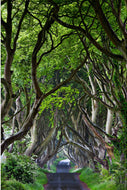 The Dark Hedges, Co. Antrim
Co. Antrim
The Dark Hedges, Co. Antrim
Co. Antrim
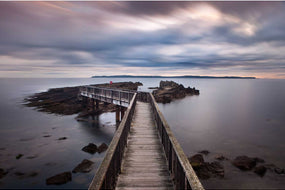 Pan's Rock, Co. Antrim
Co. Antrim
Pan's Rock, Co. Antrim
Co. Antrim
 Colliery Bay & Fair Head, Co. Antrim
Co. Antrim
Colliery Bay & Fair Head, Co. Antrim
Co. Antrim
 Dunluce Castle, Co. Antrim
Co. Antrim
Dunluce Castle, Co. Antrim
Co. Antrim
Dublin
Dublin is a county as well as a city. The bay has Howth at the north end and Killiney Hill at the south, the Muglins are a pair of rocks off Dalkey, and the Dublin Mountains start about half an hour from the city centre.
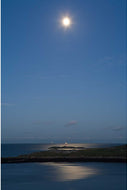 The Muglins by Moonlight II
Co. Dublin
The Muglins by Moonlight II
Co. Dublin
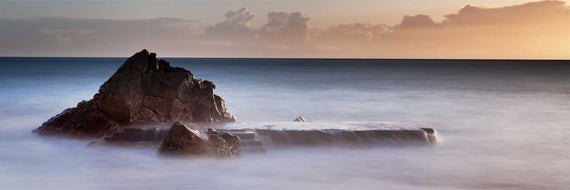 The White Rock, Killiney Bay, Co. Dublin
Co. Dublin
The White Rock, Killiney Bay, Co. Dublin
Co. Dublin
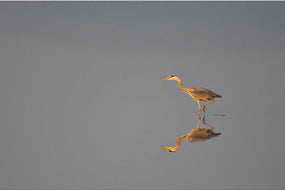 Heron, Co. Dublin
Co. Dublin
Heron, Co. Dublin
Co. Dublin
Galway
Connemara takes up the west of the county: the Twelve Bens, blanket bog, and fields walled off into very small squares. The Aran Islands sit at the mouth of Galway Bay. The Gaeltacht starts a few miles west of Galway city.
 Poll an tSéideáin, Inis Meáin, Aran Islands, Co. Galway
Co. Galway
Poll an tSéideáin, Inis Meáin, Aran Islands, Co. Galway
Co. Galway
 The Plassey, Inis Oirr, Aran Islands, Co. Galway
Co. Galway
The Plassey, Inis Oirr, Aran Islands, Co. Galway
Co. Galway
 Poll an tSéideáin Panoramic, Inis Meáin, Aran Islands, Co. Galway
Co. Galway
Poll an tSéideáin Panoramic, Inis Meáin, Aran Islands, Co. Galway
Co. Galway
 Connemara Turf, Co. Galway
Co. Galway
Connemara Turf, Co. Galway
Co. Galway
All Antrim prints · All Dublin prints · All Galway prints
About this page
The counties on this page are where the name was thickest on the ground in Ireland a century and a half ago, not a claim about any one family. Names moved around inside the country as much as they left it. The photographs are mine, made in the counties named.
More Irish surnames: Smith · Brown · Miller · Wilson · Anderson · Thomas · Taylor · Moore · Jackson · Martin · Thompson · White
How common the name was
In 1890, 120 births were registered under Lee in Ireland, most of them in Antrim, Dublin, Galway, and Limerick.
| Ulster | 43 | 36% |
|---|---|---|
| Leinster | 33 | 28% |
| Connacht | 23 | 19% |
| Munster | 21 | 18% |
| Ireland | 120 |
Limerick is the one I haven't worked in.